Friday, 25 August 2017

CertTESOL, The World at your Fingertips

ELA-Edinburgh’s next Trinity CertTESOL course begins on October 30th. Graduating from our 4-week intensive English teacher training course can open doors to exciting and creative career opportunities across the world.

If the standard 9 – 5 and daily commute isn’t for working you, but you thrive from working with people, our ELA-Edinburgh’s Trinity CertTESOL could be just the ticket to changing your career around, finding peace of mind when looking for work overseas and becoming part of a challenging industry.

The practical training and groundwork in teaching skills gives trainees the ability to find employment in a wide range of ways. Graduates of the Trinity CertTESOL work around the world for independent schools, further education colleges and universities and freelance: both face to face or online.

“An intense and rewarding learning experience leading to an international qualification. There’s not a country that doesn’t recognise it, it’s a passport”
– Douglas Mathieson, Teacher Trainer ELA-Edinburgh


What’s more; the Trinity CertTESOL is recognised internationally, is valid for life and opens the door to further skills and training.
  • What do you get from ELA-Edinburgh’s CertTESOL course?
  • Teaching practice with real English learners with different levels of English
  • Lesson planning experience and practice designing courses
  • Learner needs analysis experience
  • Teaching one-to-one class practice
  • Input and guidance from experienced tutors
  • Structured sessions to help you understand language teaching
  • Focus on professional awareness and development
  • A respected certificate to kick start your new career
So, what do you need?
The course focuses on practical training competence, so no prior teaching experience is needed. Time management, the ability to prioritise, working as a team member and a willingness to share ideas, are perfect transferable skills you will have gained from jobs and education, essential to becoming an English teacher.

Find out how to book your place on our October 30th – November 24th course by contacting

email dos@elacademy.co.uk or phone 0131 226 6182

For more information about our school, check out our website ELA-Edinburgh 
Follow us on FacebookTwitter and Instagram 

Thursday, 17 August 2017

Theatre Meets Academia at ELA-Edinburgh

As part of a combined English language course, a group of 14 Chinese students from Beijing have worked on an act of the play, The Curious Savage. Working alongside ELA-Edinburgh teachers and a drama workshop facilitator, their one hour daily classes were dedicated to learning the techniques and language associated with stage theatre and performing drama. Performance skills were included in our workshops, with each rehearsal beginning with a physical warm up using the whole body, channeling energy and working their vocal chords in anticipation of performing in a large space.

The Curious Savage, by John Patrick, set and premiered in 1950’s America, takes place in a residential home called 'The Cloisters', a lodgings to several of the play’s characters. Mrs Ethel P. Savage, the main protagonist, is taken to the home by her step-children. They think she has lost her mind, having used her late husband’s money to set up a memorial trust fund, rather than distribute the wealth between the family.


The act our students worked on depicts the arrival of Mrs Savage to an already established group of residents at The Cloisters, showing their initial encounters. We also meet her family, whom she clearly dislikes, and the ever-patient and caring staff who work at The Cloisters.

In the first week of classes, students developed their theatre vocabulary, and worked on the language of the text. At times, this was a challenge, as its context is in colloquial 1950’s America.

The following classes were dedicated to performance techniques and practising short scenes. We used a text excerpt which allowed the students to work in small groups, rotating the roles they played and let them really get to grips with reading aloud from scripts. From this group work, the play was cast, and students were given their parts. Work continued, including ‘blocking scenes’, where we collaborated in working out where set items will be positioned, where characters are on the stage when they deliver their lines, and general movement of the individuals on stage.

After five weeks of morning English classes, afternoon drama classes, rehearsals, poetry and singing, the students have a challenge ahead as they take all of this back to China to perform. The theatre practice will continue, with their lines and set design, without the help of our teachers.

They will be required to learn their lines and work together to stage the piece without the help of ELA-Edinburgh staff. The final sessions with the students were focused on ensuring that each student felt confident in their own part, and with grasping vocabulary and pronunciation.

We wish them all the best!


For more information about our school, check out our website ELA-Edinburgh

Follow us on Facebook, Twitter and Instagram

Friday, 5 May 2017

Teacher Training at ELA-Edinburgh


Options on the programme include:  Special Needs, Business programmes, CLIL.
At ELA-Edinburgh we specialise in courses for non-native teachers of English. These courses are a chance for teachers to review their language skills but also develop techniques and review the methods they use in the classroom.
What does the course involve?
  • A pro-active review of the different methodologies
  • Lesson planning: Aims, Timing, Components, Class Layout, Types of Tasks, Supplementary materials
  • Input sessions on how best to teach writing, speaking. reading and listening skills
  • Games: discussion on their use. Designing fit-for-purpose and adapting ‘known’ games
  • Error Correction and Teacher Talk Time Workshop
    Improve your error correction
Of course, the list goes on. Our courses are bespoke and designed to suit the needs of our trainees.


Why choose ELA-Edinburgh?
  • Learn from our DELTA qualified and experienced teacher-trainer
  • Enjoy our modern classrooms and interactive smartboards
  • Have access to our extensive library of teaching materials
  • Study in the heart of Edinburgh’s historic new town
  • Experience the unique buzz of Edinburgh’s festivals in August
  • Meet students from all over the world and be part of our international community
Come to Edinburgh in August and experience the world’s largest performing arts festival
If you would like some more information on the course or discuss your requirements, please email dos@elacademy.co.uk or give us a call on 00 44 131 226 6182

Friday, 28 April 2017

“10 Things to do in Edinburgh” by ELA-Edinburgh students, Matteo and Paola


1 GRASSMARKET

Two of Paola and Matteo’s star attractions: Edinburgh castle and the grassmarket
Let’s say you just arrived in Edinburgh. You still have time before returning to the Hotel, but is getting late and you are a little bit tired. Still, you want to take a walk around the city and get something to eat. The perfect place to aim for is the Grassmarket. It is an old square in the Old Town, just south of the Royal Mile, so you can get a glimpse of old medieval Edinburgh. They used to hang people there, and a lot of pubs are “in theme” (you can even have a pint at The White Hart, the oldest pub in town).
2 VISIT ROSE STREET
The Rose street is the perfect place to visit some pubs and restaurants with local food. There are a lot of different places where you can go for local specialities like ginger beer, haggis or whiskeys. Rose street is pedestrianized zone, so it is quite easy and relaxing to go through.
3 MARY KINGS’ CLOSE
The Edinburgh Old Town is probably the best place to understand how the life in the 16th century was. The best place to do it is Mary King’s Close, which is on the Royal Mile. Situated below the Edinburgh City Council, it’s perfectly preserved, and the spooky mood certainly adds something to the experience, if you are into that kind of thing. Mind that the tours are usually pretty crowded, so booking a spot in advance could be a good idea.
4 EDINBURGH CASTLE
The Edinburgh castle is the second highest point in the city and you can see it from a great distance. It looks impressive because you can see it from all over the town and if you walk the way up to the castle on the hill you can enjoy a beautiful view of the city.
5 PARLIAMENT OF SCOTLAND
All the way down the Royal Mile you can find the modern center of power for Scotland. The most recent center of power, the Parliament of Scotland, was built in the last decade, following the Devolution, so if you appreciate contemporary architecture you will probably enjoy it. Also, since the Scottish are pretty proud of their fight for freedom, you can learn all the details of their parliamentary quest. The most interesting part of the exhibition is visiting the Debate Chamber (you can also watch a public debate).


The Scottish parliament in front of Arthur’s Seat
6 VISIT WELLINGTON COFFEE SHOP
The Wellington coffee shop is a lovely place for recover from the first daily english session. The great Italian coffee and the tasty scones with his different ingredients makes the life easy going.
7 HOLYROOD PALACE
The other seat of power down the Royal Mile is Holyrood Palace. Built during the 15th century, it was the residence of Scotland’s Royal Family. Now it is the Royal Residence during official visits of the British Royal Family. When the Queen is not visiting Scotland, you can visit most of the palace, and in summer also the gardens. In particular, in the gardens you can visit the ruins of the St. Augustine Abbey.
8 ROYAL MILE
One of the most beautiful and famous streets is Royal mile. The architecture of the buildings is typical for Edinburgh with its old churches and houses with the gothic style. You can also look for some souvenirs or some pretty little things to buy. Furthermore there are some fudge kitchens where you can buy the best homemade fudge in very different flavours. They also show you how they produce this special Scottish candy.

The Royal Mile: home to Mary King’s Close and Holyrood Palace
9 CLIMB ARTHUR’S SEAT
The sleeping volcano just behind Holyrood Palace is the highest point of Edinburgh (ca. 250m), and the potential panoramic view that this fact implies should be enough to convince you to climb all the way up. You can actually see all of Edinburgh, south to the Borderlands, the Kingdom of Fife and all the way out to the North Sea. Also, if you appreciate archeology and paleontology, you can find the remains of three Prehistoric Forts. The tracks are easy, but remember to bring a jacket (it’s very windy) and sturdy shoes.
10 PORTOBELLO BEACH
The Portobello beach is a few miles away  from the city center and if you are there you have a beautiful view over the sea. You can go there if you need some variety from the crowded city. If you are as crazy as some Scottish people you can do some sunbathing.


Friday, 21 April 2017

Free English Lessons at ELA-Edinburgh in June


Would you be interested in receiving free English lessons from enthusiastic teachers in top class facilities? Normally it would be too good to be true but at ELA-Edinburgh this June it is our reality!
Those of you who regularly read our blog will know that ELA-Edinburgh is putting on a Trinity CertTESOL course from June 5th-30th. This teacher training course will give our trainees a great qualification as they start their teaching careers.  An important part of the course is teaching practice; our trainees will do at least 6 hours of teaching during their course. This is where you and your friends can benefit!
We are offering free lessons for students who will be taught by our trainee teachers. Every weekday from June 6th -June 29th you could benefit from two hours of free lessons! This is an offer that we can only run during CertTESOL courses so don’t miss out! We only have a certain number of places available so don’t wait too long before applying.
All levels of English are welcome, when you apply we will send you a level test to complete and find the right class for you. All you need to do is pay a £30 deposit, which you will get right back if you attend all the classes! Plus, as a bonus, you will get an hours’ free lesson with a highly experienced teacher at the end of your course!
This is a unique opportunity to get lessons in one of Edinburgh’s premier private language academy and benefit from our fantastic teaching resources. As the saying goes, don’t look a gift horse in the mouth!
For more information, or to ask for a placement test, email dos@elacademy.co.uk phone 0131 2266182 or come and see us at 71 George Street!

Wednesday, 5 April 2017


Learn to Learn to with ELA-Edinburgh


Here at ELA-Edinburgh we see helping our students become better students as one of our main goals. With this in mind we include ‘learning to learn’ sessions at the start of all of our courses and the feedback from them is always great.

Make sure this isn’t you!!
Earlier this year we brought you tips on how to study more effectively, just look back in our blog to check out the details. Today we present some advice on how to learn vocabulary. If you sit at your desk and repeat irregular verbs to yourself, we are here to help!
  • Flash cards
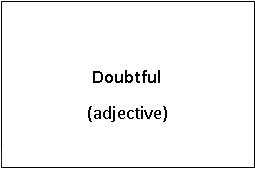
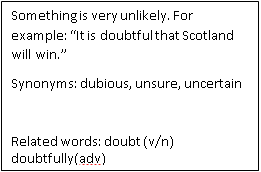
You can make them at home and study them on the bus, at lunch or in front of the TV. Here is an example to get you started that shows some of the information you might want to include.

Don’t forget to mix up the order of the cards and take a moment to guess before you turn over your card!
If you’re more into technology you can try some of the great learning apps, such as Quizlet, which let you build your own personalized vocabulary lists
  • A notebook
  • Perhaps the next stage from flashcards is a notebook with your organized class notes. Teachers often notice that students write down vocabulary in a lesson but then do not organize it. Successful students generally have a well ordered notebook with different sections for phrasal verbs, idioms or grammar notes. This involves re-writing your class notes at the end of every week but you will soon notice the benefits.
  • Dictionaries
Whether online or print, dictionaries will define a word, help you spell it and explain how to pronounce it. 
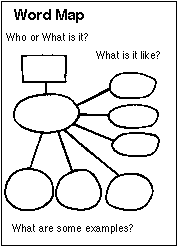
  • Word Maps
Word maps give you the freedom to link words in groups or categories and the chance to illustrate your diagrams. If you’re a visual learner and enjoy learning through pictures, they could be             perfect for you.
  • Learn Chunks
Many people find it easier to learn phrases rather than individual words. For example, ‘do homework’ or ‘make your bed’ are chunks of language. Other examples of chunks might be phrasal verbs, ‘to get on well with somebody’, or idioms, ‘to get on like a house on fire.’

  • Learn to take words apart
Many language students find that analysing a word helps them to guess it’s meaning without turning to a teacher or dictionary for help. For example; the word ‘unimaginable’ might look long and complicated but let’s try taking it apart:
Viewed like this the word has three clear parts; the prefix, the stem (or route) and the suffix. If we remember that ‘able’ refers to ability and that ‘un’ is a general prefix to make something negative, we can guess that unimaginable means impossible to imagine. This technique is particularly useful for speakers of other European languages.

  • Review Often
Your goal is to transfer your new vocabulary from your short term to your long term memory. There’s no point learning words in class today and not being able to use them a week later so make sure you look back over your notes regularly. With the help of a well-organized workbook you can make sure that vocabulary doesn’t slip out of your head.


Wednesday, 1 March 2017


CertTESOL course at ELA-Edinburgh June 5th-30th


ELA-Edinburgh is excited to announce that our Trinity CertTESOL course will run from June 5th-30th this year. You only have to read our blog from September 29th to know what benefits a CertTESOL qualification can bring to an aspiring teacher. To put it in a nutshell, this certificate is respected around the world and will open doors as you begin your ELT career. With CertTESOL in your pocket you can find jobs in places you want to be and work for schools that are well-run.


Having signed up for the course, what are you expected to do to earn your teaching certificate? It’s worth pointing out that every CertTESOL course follows the same strict guidelines laid down by Trinity. This helps to ensure that the qualification is respected wherever you want to work. What follows is an outline to what the course actually involves.
A pre-course task and interview. This is mainly aimed at evaluating your knowledge of English grammar but don’t worry, you’re not expected to be an expert! The interview gives the course tutor a chance to make sure the course is right for you and, if you’re a non-native speaker, assess your level of English. 
A total of 130 timetabled hours and 70 non-timetabled hours. This includes 6 hours of your teaching, observed and assessed, plus 4 guided hours observation of experienced teachers. You will also receive 90 hours of supervised input.
4 or 5 written assignments. These are in the form of a journal and are designed to help you reflect on the elements of the course you have just studied. As there is no test at the end of the course these take on added importance.
Teaching Practise. This unit is by far the biggest on the course, taking up 74 of the 130 scheduled hours. It covers a wide range of issues including: methodology, teaching skills, guided observation, textbook and materials evaluation as well as methods of testing.
Language Awareness and Skills. The second unit tests trainees’ knowledge of grammar, lexis and phonology and how to teach these to students.
Learner Profile. Unit 3 aims to teach you how to analyse students’ needs, design courses and teach one-one classes. It draws on the knowledge you gained in the first two units.
Materials Assignment. In this unit you will learn to produce, adapt and evaluate the materials that you use in lessons. You then use the materials you designed in a lesson observed by a Trinity moderator.
Unknown Language. The final unit examines methods and approaches suitable for beginners of a language, while avoiding use of the learners’ mother tongue.  
End of course party. Traditional and well deserved!
At ELA-Edinburgh we enhance this comprehensive course of learning by providing you with fantastic, modern classrooms with interactive smart boards and a wide range of textbooks. Though you will be led by our experienced and friendly course tutors, the whole ELA staff is on hand to help. 
You can find more information on the CertTESOL syllabus here and visit ourwebsite for more information. Alternatively, can contact us at info@elacademy.co.uk